

Acts 1:15–26
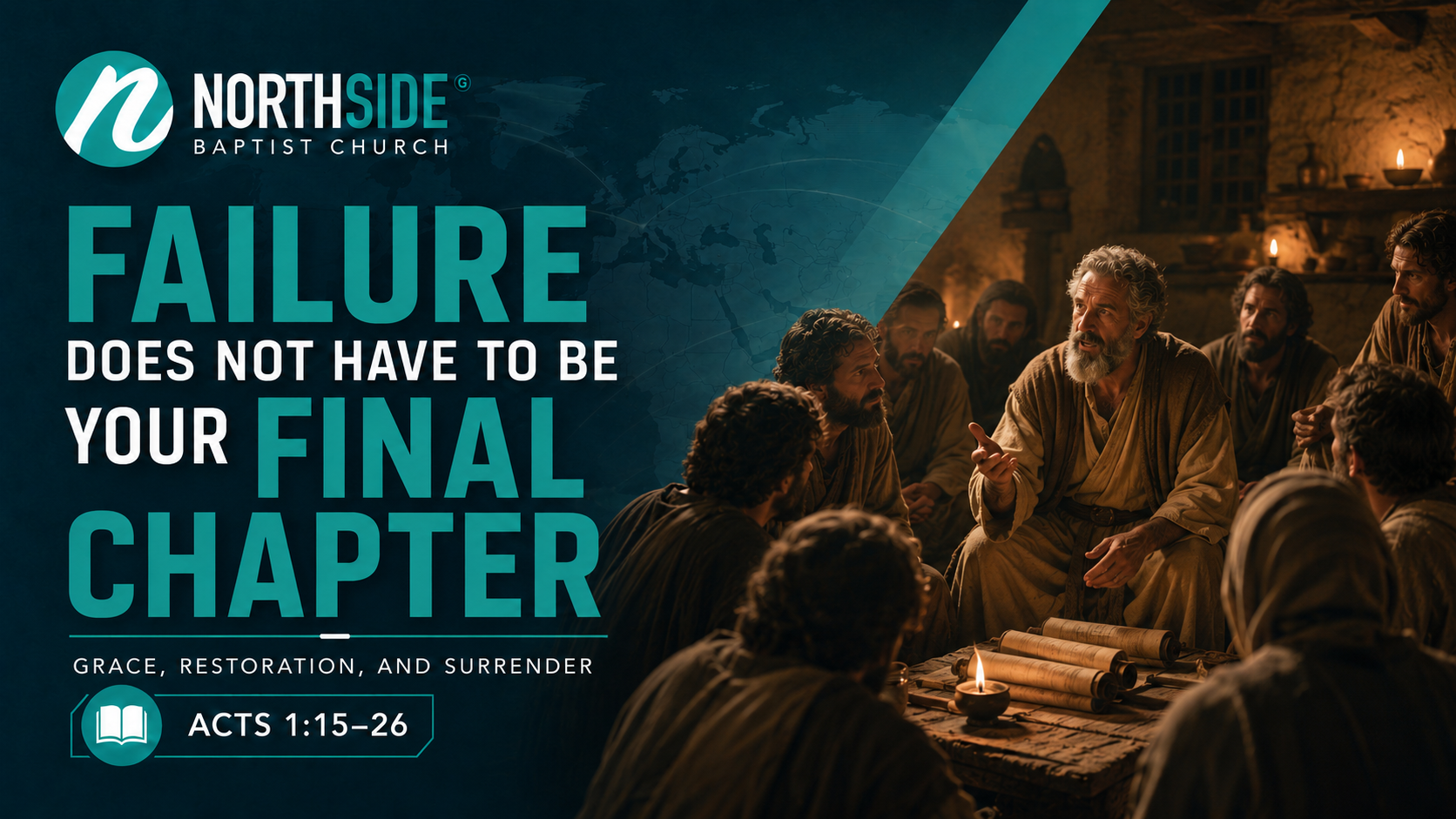
Peter stood before a gathering of approximately 120 believers in Acts 1.
That might not seem unusual until we remember what Peter had done only weeks earlier.
On the night Jesus was arrested, Peter had boldly declared that he would remain loyal even if everyone else abandoned Christ.
Within hours, Peter denied Jesus three times.
He failed publicly.
He failed painfully.
He failed at the very moment he believed he would be strongest.
Yet in Acts 1, Peter is standing before the church as a leader.
What happened?
Grace happened.
Restoration happened.
Jesus happened.
Peter’s failure did not become the final chapter of his story.
That truth should encourage anyone who has ever looked backward and thought, “God could never use me again.”
The gospel is filled with restoration.
Peter sinned, but he repented.
Jesus restored him.
Then Jesus put him back to work.
Acts 1 also deals with a very different kind of failure: Judas.
Judas had walked with Jesus.
He had heard the teaching.
He had witnessed the miracles.
He had traveled with the apostles.
He had even participated in ministry.
Yet Judas betrayed Christ.
That should cause us to examine our own hearts.
It is possible to be around the things of God without truly surrendering to God.
Church attendance cannot save us.
Religious knowledge cannot save us.
Having Christian parents cannot save us.
Serving in ministry cannot save us.
Only Jesus saves.
After Judas’ death, the early church faced an important decision. His position among the apostles needed to be filled.
How did they respond?
First, they turned to Scripture.
Peter quoted from the Psalms and allowed the Word of God to provide direction.
That matters because difficult situations often produce strong emotions.
When something painful happens, we can react quickly.
We can make decisions based on anger, fear, frustration, or personal preference.
Scripture gives us something more dependable.
Think about a ship traveling through heavy fog.
The captain cannot safely navigate based only upon what he sees through the windshield. Visibility may be almost nonexistent.
He needs reliable instruments.
He needs a compass.
God’s Word is our compass when circumstances become unclear.
After consulting Scripture, the believers identified two qualified men: Joseph called Barsabbas, also known as Justus, and Matthias.
Then they prayed.
Their prayer is beautiful:
“You, Lord, who know the hearts of all, show which one of these two you have chosen.”
They recognized something we easily forget.
God sees what we cannot see.
We see résumés.
God sees hearts.
We see appearances.
God sees motives.
We see public behavior.
God knows private character.
The believers wanted God’s choice more than their own preference.
That is genuine surrender.
One pastor described surrender to God as signing your name at the bottom of a blank sheet of paper and then allowing God to fill in the details.
Most of us would rather reverse that process.
“Lord, show me the plan first. Then I’ll decide whether I want to sign.”
Faith says, “Lord, my yes comes before I know every detail.”
Acts 1 gives us two powerful reminders.
The story of Judas warns us not to confuse proximity to Jesus with genuine faith in Jesus.
The story of Peter reminds us that genuine failure, when met with repentance and grace, does not have to disqualify us forever.
Maybe you have made mistakes.
Maybe there are moments you wish you could erase.
Maybe you believe the best God could ever do with your life is behind you.
Look at Peter.
The man who denied Jesus would soon stand at Pentecost and boldly proclaim Jesus. Thousands would respond to the gospel.
Your failure may be part of your story.
It does not have to be the end of your story.
Jesus still restores people.
Jesus still changes people.
Jesus still uses people.
And sometimes the person God uses most powerfully is the one who knows exactly what it means to have fallen—and to have been lifted back up by grace.
