

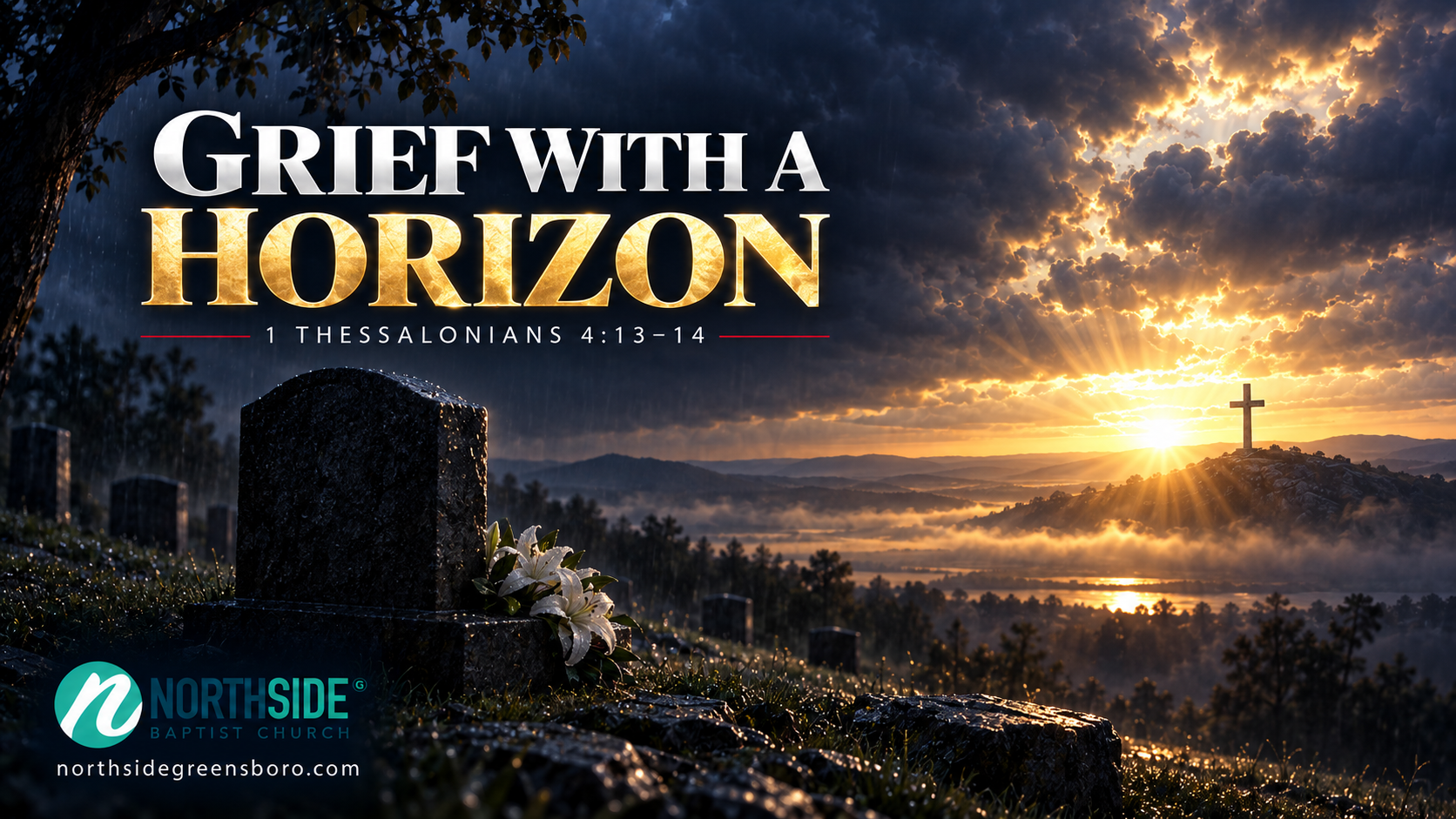
Grief With a Horizon
Scripture Focus: 1 Thessalonians 4:13–14
“But we do not want you to be uninformed, brothers, about those who are asleep, that you may not grieve as others do who have no hope.” —1 Thessalonians 4:13, ESV
For thousands of families, September 11 is not merely a chapter in an American history book. It is personal.
It is an empty chair at the table, a photograph on the mantel, a final phone call, or a loved one who never came home. Anniversaries can bring those emotions back with surprising force. Even twenty-five years later, grief can make yesterday feel very close.
The Bible never tells us that faithful people should not grieve.
Jesus wept at the tomb of Lazarus. David mourned deeply. Job cried out from the ashes. The Psalms contain the prayers of people whose hearts were overwhelmed.
Tears are not evidence that our faith has failed. They are often evidence that we have loved.
Paul does, however, describe a distinctly Christian kind of grief. He writes that believers do not grieve “as others do who have no hope.”
Paul is not contrasting people who grieve with people who remain emotionally untouched. He is contrasting grief without hope and grief with hope.
Christian grief tells the truth about death. Death is painful. It separates families, interrupts plans, and leaves wounds that time does not completely remove. The gospel does not ask us to pretend otherwise.
But Christian hope tells the rest of the story.
“For since we believe that Jesus died and rose again,” Paul continues, “even so, through Jesus, God will bring with him those who have fallen asleep.”
Our hope rests on something that has already happened: Jesus Christ died and rose again.
Christian hope is not positive thinking. It is not the belief that everything will somehow work out according to our preferences. It is confidence grounded in the resurrection of Jesus.
Because Jesus lives, death has been defeated.
Because Jesus lives, those who belong to Him will live.
Because Jesus lives, the cemetery is not the end of the Christian’s story.
This does not mean we will stop missing those we love. It means that our sorrow has a horizon. Beyond the tears is resurrection. Beyond the grave is reunion. Beyond this broken world is the presence of Christ.
That hope also changes how we remember the past.
We can speak the names. We can tell the stories. We can honor courage and acknowledge pain. We can remember honestly without becoming trapped in yesterday because Jesus is leading His people toward a promised future.
Perhaps you are carrying a grief that has nothing directly to do with September 11. You may be mourning a spouse, parent, child, friend, broken relationship, lost opportunity, or season of life that ended before you were ready.
God is not offended by your tears.
Bring them to Him.
Bring Him the questions you are afraid to ask. Bring Him the memories that make you smile and the ones that break your heart. Bring Him the ache that other people may not understand.
Then place your grief beside the empty tomb.
The resurrection does not make your loss insignificant. It declares that your loss will not be ultimate.
We grieve—but not without hope.
We weep—but not as those who believe death has won.
We remember—but we also look ahead.
For everyone who belongs to Jesus Christ, grief has a horizon, and on that horizon stands our risen Savior.
Prayer: Lord Jesus, comfort those who mourn. Meet us in our memories and hold us in our sorrow. Thank You that because You live, death does not have the final word. Teach us to grieve honestly and hope confidently. Amen.