

Life has a way of placing pressure on the heart.
Some burdens arrive suddenly. A doctor calls with unexpected news. A job becomes uncertain. A relationship begins to unravel. Other burdens build slowly over time. Grief lingers. Bills accumulate. Worry settles into the mind. Sleepless nights become normal.
At Northside Baptist Church, we know what burdens look like. Widows carry the ache of loss. Parents and grandparents pray for children who have wandered far from God. Young families face financial and emotional pressures. Students are trying to follow Christ in a confusing culture. Many quietly battle loneliness, illness, fear, and discouragement.
The Bible does not pretend these pressures are imaginary. It does, however, tell us what to do with them.
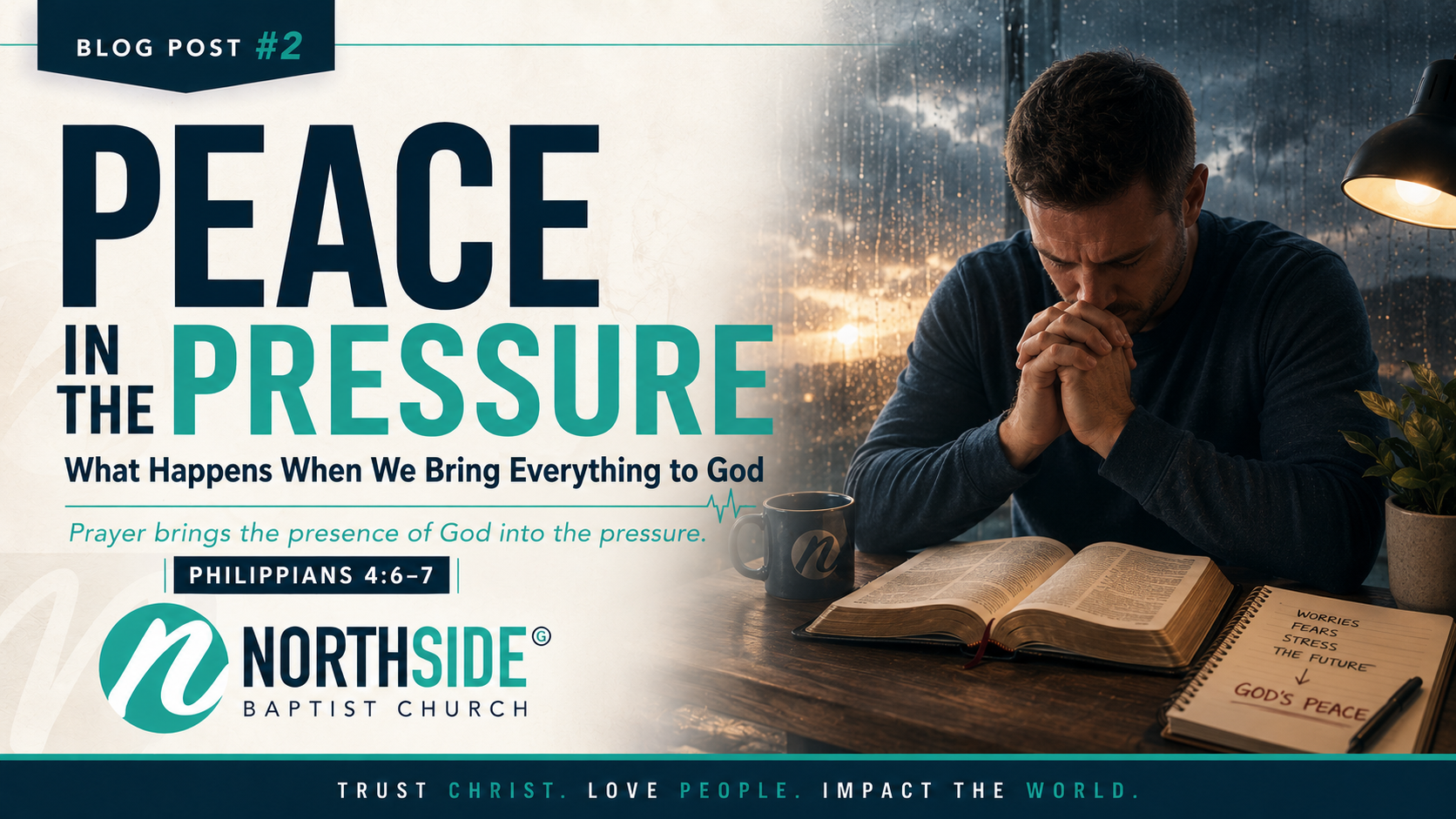
Philippians 4:6–7 says, “Do not be anxious about anything, but in everything by prayer and supplication with thanksgiving let your requests be made known to God.”
Notice the word “everything.” God does not divide our concerns into categories of important and unimportant. He invites us to bring every burden to Him.
That does not mean prayer will always remove the problem immediately. Sometimes God changes the circumstance. Sometimes He changes us in the middle of the circumstance. Either way, He gives grace.
Prayer brings the presence of God into the pressure.
When we pray, we are not informing God of something He does not know. We are placing what overwhelms us into the hands of the One who is never overwhelmed. We are exchanging self-reliance for trust. We are admitting, “Lord, I cannot control this, but I believe You are still in control.”
Paul says the peace of God will guard our hearts and minds in Christ Jesus. That word “guard” is powerful. It carries the idea of a soldier standing watch. God’s peace does not always explain the problem, but it protects the heart from being consumed by it.
There is a peace that comes from having all the answers, and there is a deeper peace that comes from knowing the One who does.
Prayer does not deny pain. It gives pain a place to go.
You can tell God when you are frightened. You can tell Him when you are angry, confused, disappointed, or tired. Biblical prayer is not pretending. It is honest dependence. The Psalms are filled with people crying out to God from distress, yet returning again and again to trust.
Hebrews 4:16 tells us to “draw near to the throne of grace” with confidence. We do not approach as strangers trying to earn an audience. We come as children welcomed by a loving Father. We come because Jesus has opened the way.
Some people carry burdens because they believe they must first become stronger, calmer, or more spiritual before they pray. But prayer is not a reward for strength. It is where strength is found.
You may not be able to change your situation today. You may not know what tomorrow will bring. But you can pray. You can place every fear, every need, every person, and every unanswered question before God.
And do not miss Paul’s instruction to pray with thanksgiving. Gratitude does not mean we are thankful for every painful circumstance. It means we remember that God has been faithful before, He is present now, and He will remain faithful in the future.
Anxiety says, “Everything depends on me.”
Prayer says, “Everything belongs to God.”
The next time pressure begins to rise, pause before panic takes over. Turn the burden into a prayer. Speak the name of the person you are worried about. Describe the situation honestly. Ask for wisdom. Ask for help. Ask for peace.
Then leave the burden where you placed it.
The God who invites you to pray is the God who promises to guard your heart.