

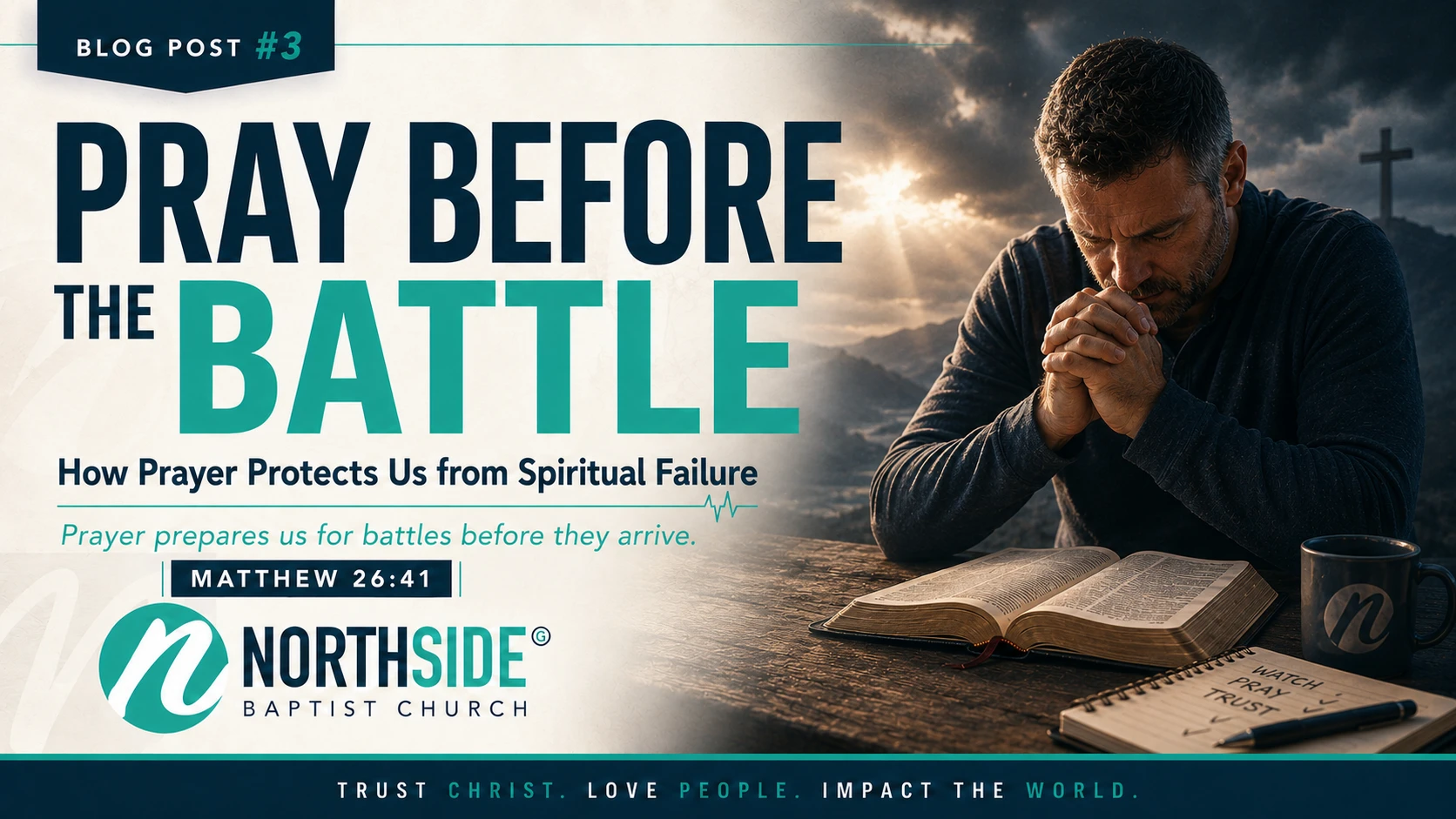
Most people begin praying seriously when the crisis has already arrived.
We pray after the argument has exploded, after temptation has gained momentum, after fear has taken hold, or after a poor decision has already been made. We call on God in the middle of the battle, and He is gracious to hear us. But Jesus taught His disciples something even better: pray before the battle begins.
In Matthew 26:41, Jesus told them, “Watch and pray that you may not enter into temptation. The spirit indeed is willing, but the flesh is weak.”
These words were spoken in Gethsemane. Jesus knew what was coming. Betrayal, arrest, false accusations, violence, and the cross were only hours away. He prayed with intensity while His disciples slept. Before the night was over, Peter, who had confidently promised loyalty, denied Jesus three times.
Peter’s problem was not that he lacked sincerity. He loved Jesus. His spirit was willing. But sincerity without spiritual dependence is not enough. The flesh is weak.
Prayer prepares us for battles we cannot yet see.
We often overestimate our strength. We assume we will make the right choice when pressure comes. We believe we can resist temptation because we have resisted it before. We imagine we will remain calm, faithful, and courageous no matter what happens.
Then the moment arrives, and we discover how weak we really are.
That discovery can either humble us or defeat us. Jesus did not tell His disciples, “Try harder.” He told them, “Watch and pray.”
To watch means to stay spiritually alert. To pray means to remain dependent upon God. Together, they form a posture of readiness.
Prayer sharpens our awareness. It helps us recognize the situations, emotions, and relationships where we are most vulnerable. It teaches us to notice when pride is rising, anger is building, fear is controlling us, or compromise is becoming attractive.
Prayer also strengthens the inner life. It does not make us perfect, but it keeps us close to the One who is. The more time we spend with Christ, the more quickly we recognize what pulls us away from Him.
Many spiritual failures do not begin in public. They begin privately, when prayer becomes shallow, irregular, or absent. Long before a person falls outwardly, there is often a quiet drift inwardly.
That is why daily prayer matters.
We need to pray before entering a difficult conversation. We need to pray before responding to an upsetting message. We need to pray before making financial decisions. We need to pray before temptation appears on a screen, in a relationship, or in a moment of emotional weakness.
We should pray, “Lord, guard my thoughts. Control my tongue. Give me wisdom. Help me see the way of escape. Keep my heart tender. Make me more concerned with honoring Christ than defending myself.”
The apostle Peter learned this lesson through failure. Later, he would become a courageous leader in the early church. His confidence was no longer rooted in his own determination but in the grace and power of God.
There is hope in that for all of us.
Perhaps you have already failed in an area where you once felt strong. Do not allow shame to drive you farther from God. Let it drive you back to Him. Confess your sin, receive His forgiveness, and begin rebuilding a life of prayerful dependence.
But do not wait for the next crisis.
The wise believer prays before the pressure rises. The wise parent prays before the child faces temptation. The wise church prays before launching a ministry. The wise leader prays before making a decision.
Prayer is not merely what we do when the battle becomes difficult. Prayer is how we prepare before the battle ever begins.
Watch and pray. The spirit may be willing, but the flesh is still weak.