
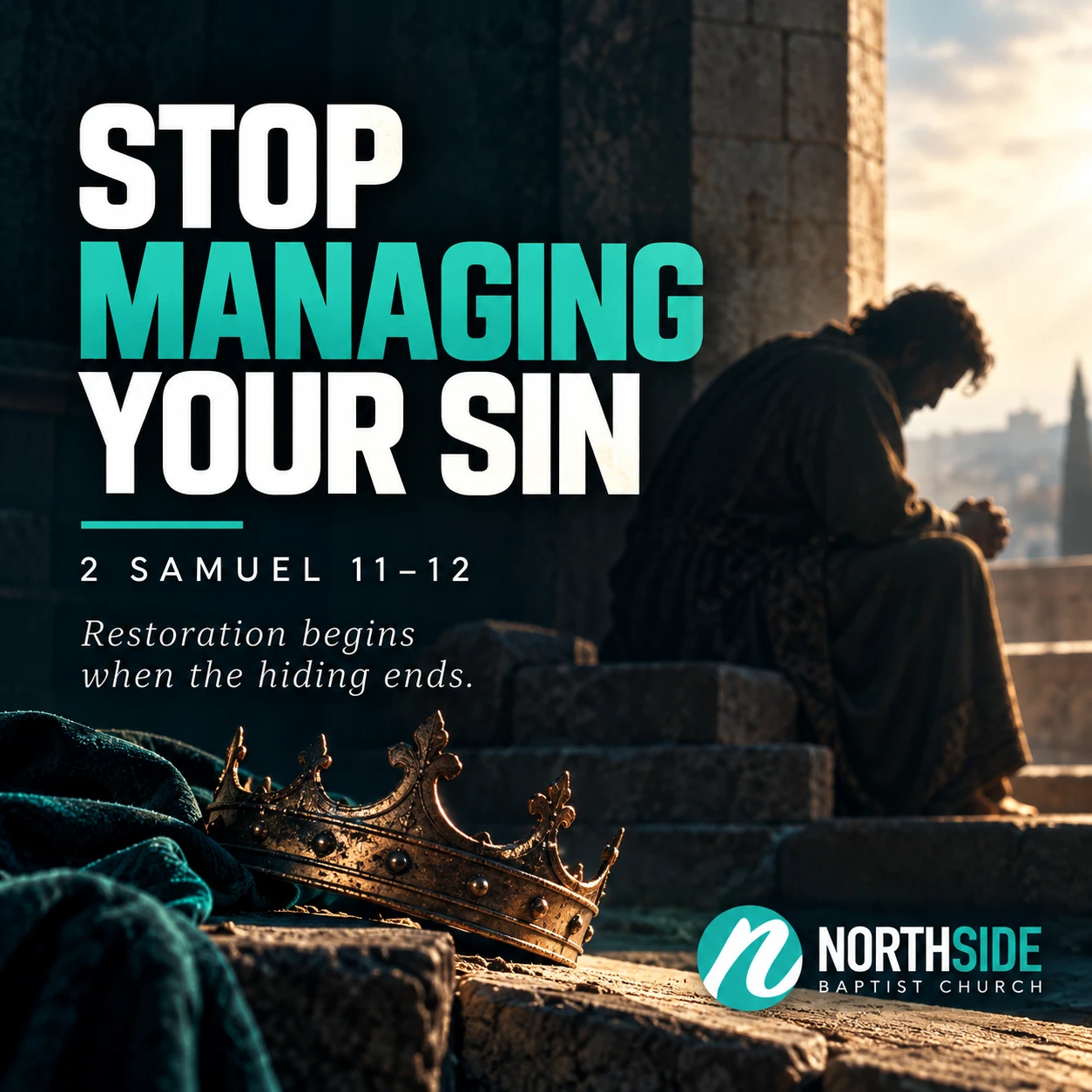
Scripture: 2 Samuel 11–12
One of the most dangerous things a Christian can do is learn how to manage sin instead of dealing with it.
David did not wake up one morning planning to destroy his family, compromise his testimony, take another man's wife, and arrange the death of one of his most faithful soldiers. His fall did not begin with murder. It began with compromise.
One look.
One desire entertained.
One decision that should never have been made.
David saw Bathsheba, desired her, sent for her, and committed adultery with her. Then came the news that changed everything: she was pregnant.
At that moment, David had a choice.
He could confess his sin, or he could try to control the consequences.
He chose control.
That is where things became even worse.
David brought Uriah home from the battlefield, hoping he would go home to his wife and unknowingly provide David with a cover story. When that failed, David tried another plan. Then another. Eventually, the king who once stood courageously before Goliath was arranging the death of an innocent man to hide his own sin.
That's what hidden sin does.
When we decide to manage sin instead of confessing it, one sin often requires another sin to protect it.
We lie because we don't want someone to discover what we did. Then we lie about the lie. We erase the message. Delete the history. Move the money. Change the story. Blame someone else. Explain away our behavior.
Before long, we are spending more energy protecting the sin than it would have taken to confess it.
Perhaps that is why someone reading this feels exhausted.
You aren't necessarily tired because life is busy. You may be tired because hiding is hard work.
David discovered that.
Psalm 32 gives us a glimpse into what life was like while David remained silent. He describes the internal misery of carrying unconfessed sin. Everything may have looked normal from the outside, but something was dying on the inside.
And Christians can become very good at looking normal.
We can attend church.
We can sing.
We can shake hands.
We can carry our Bible.
We can even serve.
And all the while there can be a room inside our heart where we have essentially hung a sign on the door saying, “God, You may have everything except this.”
But God loves His children too much to comfortably leave us there.
Eventually Nathan walked into David's life.
God brought into the light what David had desperately tried to keep in the darkness.
And strangely enough, that confrontation was an act of grace.
Maybe the greatest mercy God can show us sometimes is refusing to allow us to continue successfully hiding.
The question is not whether Christians can fall. Scripture makes it abundantly clear that they can.
The question is: What are you going to do when you realize you have fallen?
Don't manage it.
Don't rename it.
Don't excuse it.
Don't build another layer around it.
Bring it into the light.
First John 1:9 reminds believers that when we confess our sins, God is faithful and just to forgive us and cleanse us from unrighteousness.
There is freedom on the other side of confession.
The moment David stopped managing his sin was the moment the road toward restoration could finally begin.
Maybe that road needs to begin for you today.
Restoration begins when the hiding ends.