

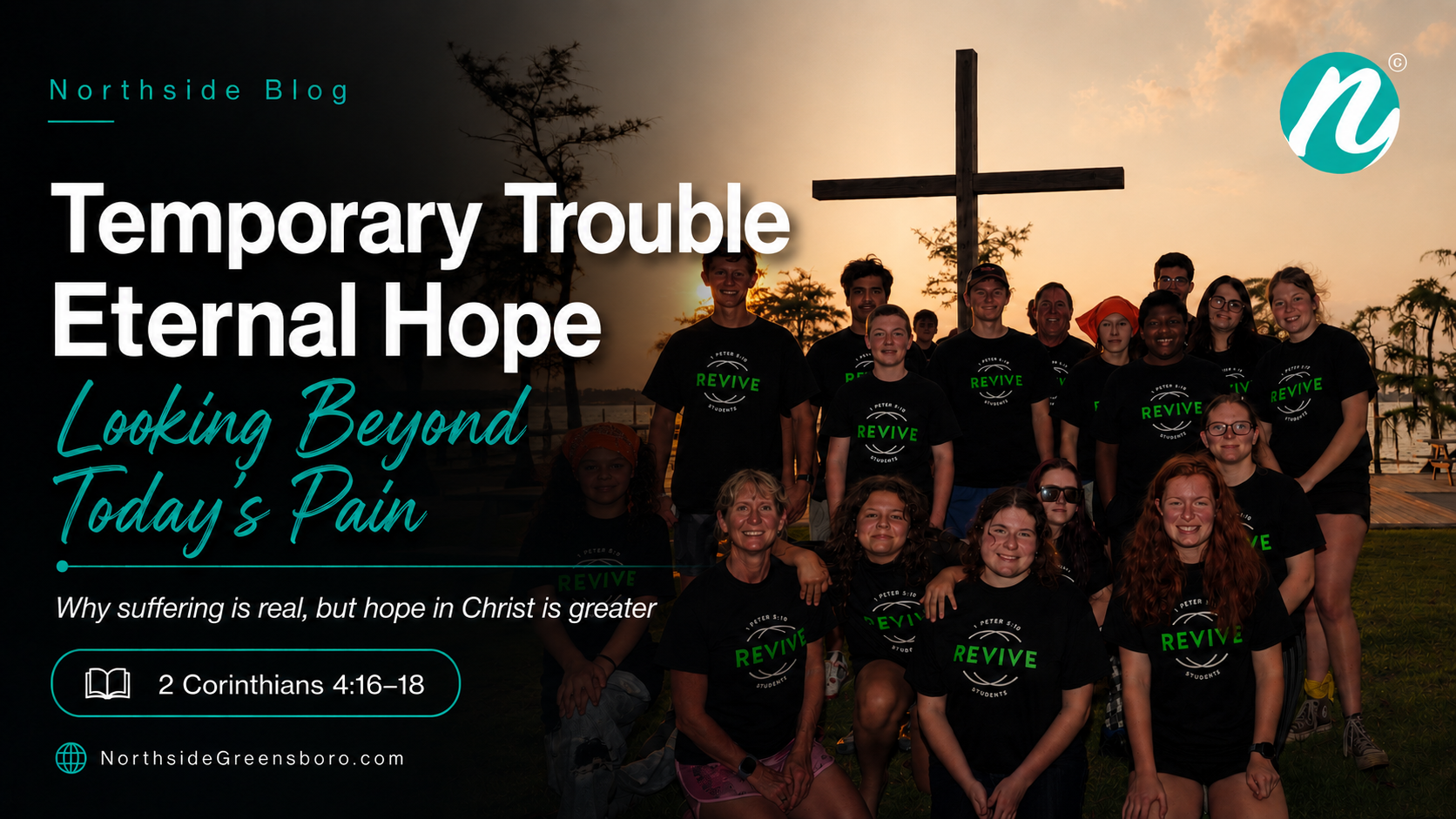
When we are suffering, the problem directly in front of us can become the only thing we see. A painful circumstance can feel permanent, even when it is not. Fear tells us that nothing will ever change. Grief tells us that joy will never return. Discouragement tells us that there is no reason to hope.
The Apostle Paul understood severe suffering, yet he refused to allow temporary trouble to erase eternal truth.
In 2 Corinthians 4, Paul speaks about being renewed inwardly day by day. His body was becoming weaker, but his faith was being strengthened. His circumstances were difficult, but his hope was anchored beyond those circumstances.
Paul did not deny the reality of suffering. He placed suffering beside eternity.
That changes the perspective.
A problem can feel enormous when we compare it only to our present strength. But when we compare it to the promises of God, the resurrection of Christ, and the glory of eternity, we begin to see that suffering is not the end of the story.
For the Christian, this world is not all there is.
There is coming a day when God will make all things new.
There will be no more death.
No more grief.
No more pain.
No more betrayal.
No more temptation.
No more disease.
No more separation.
This hope is not wishful thinking. It is grounded in the resurrection of Jesus Christ.
Jesus entered suffering.
He was rejected, beaten, crucified, and buried.
But the grave could not hold Him.
Because Jesus rose, suffering will not win.
Sin will not win.
Death will not win.
The grave will not win.
That does not make today’s pain insignificant. Christian hope never asks us to pretend that suffering is easy. Jesus Himself wept at the grave of Lazarus. He understands grief, sorrow, betrayal, and physical agony.
The hope of the gospel is not that Christians avoid pain. The hope of the gospel is that Christ enters our pain and promises that it will not have the final word.
Some seasons of life feel long. We may pray for change and wait far longer than expected. We may ask questions that remain unanswered. We may carry wounds that take years to heal.
During those seasons, we must remember that God is still working in ways we cannot always see.
Outwardly, we may feel weary.
Inwardly, God can still be renewing us.
Our circumstances may remain difficult.
Our faith can still grow deeper.
Our prayers may be tearful.
God can still use them to draw us nearer.
First Peter 5:10 teaches that after suffering, the God of all grace will restore, strengthen, and establish His people.
Those words are filled with hope.
Restore.
Strengthen.
Establish.
God restores what suffering has wounded.
He strengthens what hardship has weakened.
He establishes what fear has shaken.
This is one of the reasons believers can endure. Our confidence does not rest in our ability to understand everything. It rests in the character of God.
He is good when life is hard.
He is faithful when the future is uncertain.
He is present when we feel alone.
He is working when we cannot see the result.
You may be walking through temporary trouble today. It may not feel temporary, but eternity tells a greater story.
Keep your eyes on Jesus.
Hold tightly to His promises.
Allow the church to walk beside you.
Continue praying, even when the words are difficult.
The same Savior who carried the cross now holds you.
The same Jesus who walked out of the grave will one day make all things new.
Your suffering is real.
Your hope is greater.
Jesus is alive, and because He lives, your story does not end in sorrow.