

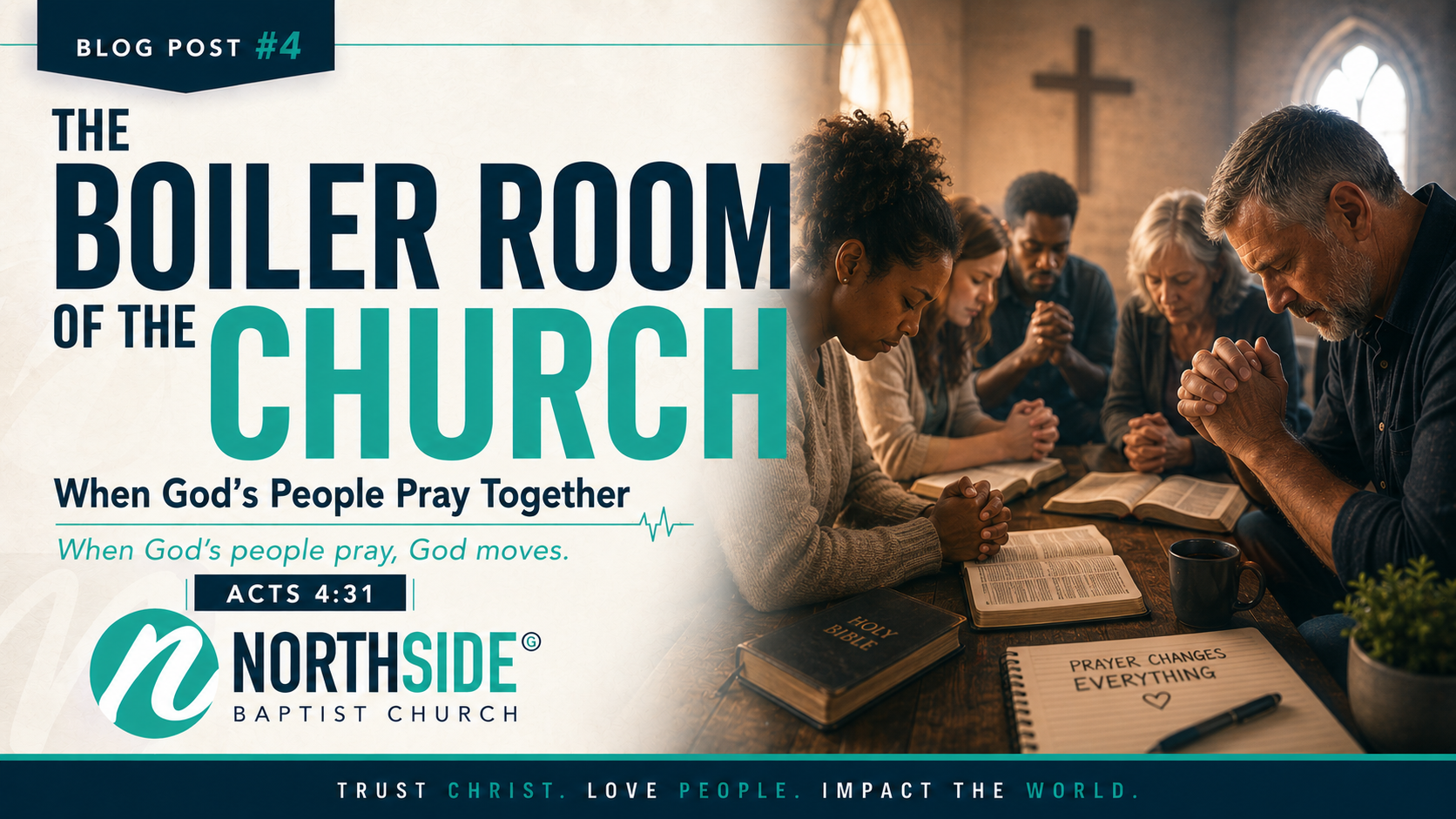
A pastor once gave a group of visitors a tour of his church. He showed them the sanctuary, classrooms, choir area, and various ministries. The visitors were impressed by everything they saw.
Then the pastor led them downstairs to a simple room filled with people praying. He smiled and said, “This is the boiler room of the church.”
In older buildings, the boiler room was where the power and heat were generated. It was not the most visible room, but it affected every other room in the building.
That is what prayer should be in the life of a church.
The strength of a congregation is not ultimately determined by its platform, programs, budget, attendance, or buildings. Those things may be useful, but they are not the source of spiritual power. The true strength of a church is found in its dependence upon God.
Acts 4:31 describes the early believers praying together. When they had prayed, the place was shaken, they were filled with the Holy Spirit, and they continued speaking the Word of God with boldness.
The early church did not merely discuss prayer. They prayed.
They prayed before making decisions. They prayed when leaders were chosen. They prayed when persecution came. They prayed when missionaries were sent. They prayed when believers were imprisoned. The church was born in prayer, sustained by prayer, and empowered through prayer.
What might God do if churches recovered that kind of dependence?
Imagine every Sunday School class praying earnestly. Imagine families gathering for prayer each day. Imagine deacons, ministry leaders, students, widows, senior adults, and children united in calling upon God. Imagine a church where prayer was not limited to opening and closing meetings but became the heartbeat of every ministry.
At Northside, we have much to pray for.
We should pray for White Oak, Caesar Cone, Revolution Mill, and the surrounding neighborhoods. We should pray for Greensboro, our schools, first responders, city leaders, churches, and families. We should pray for the lost by name. We should pray for those who are hurting, addicted, lonely, grieving, or searching for hope.
We should pray for revival.
Throughout history, genuine spiritual awakenings have been marked by extraordinary prayer. Revival does not begin with better advertising. It does not begin with a new program, larger crowd, or more impressive platform. Revival begins when God’s people humble themselves, seek His face, repent of sin, and cry out for His presence.
Prayer changes the atmosphere of a church because prayer changes the people in the church.
When we pray together, pride is confronted. Relationships are softened. Burdens are shared. Faith is strengthened. Our attention moves away from personal preferences and back toward the mission of Christ.
A praying church becomes a compassionate church because people who spend time with God begin to care about what God cares about. A praying church becomes a bold church because dependence upon God produces courage. A praying church becomes a united church because it is difficult to remain divided from people with whom we are sincerely praying.
The question is not whether we believe prayer is important. Most Christians would quickly say yes. The question is whether prayer occupies an important place in the actual life of our church.
Do we pray before planning? Do we pray before acting? Do we pray for people by name? Do we pray until our hearts are aligned with God’s will?
Every ministry needs a boiler room.
The most important work may not happen on the stage. It may happen in a quiet room where a handful of believers call upon God. It may happen around a kitchen table where a family prays. It may happen at an altar where someone weeps for a lost loved one.
When God’s people pray, God moves.
Let us become a church known not only for what we do, but for how deeply we depend upon Him.