

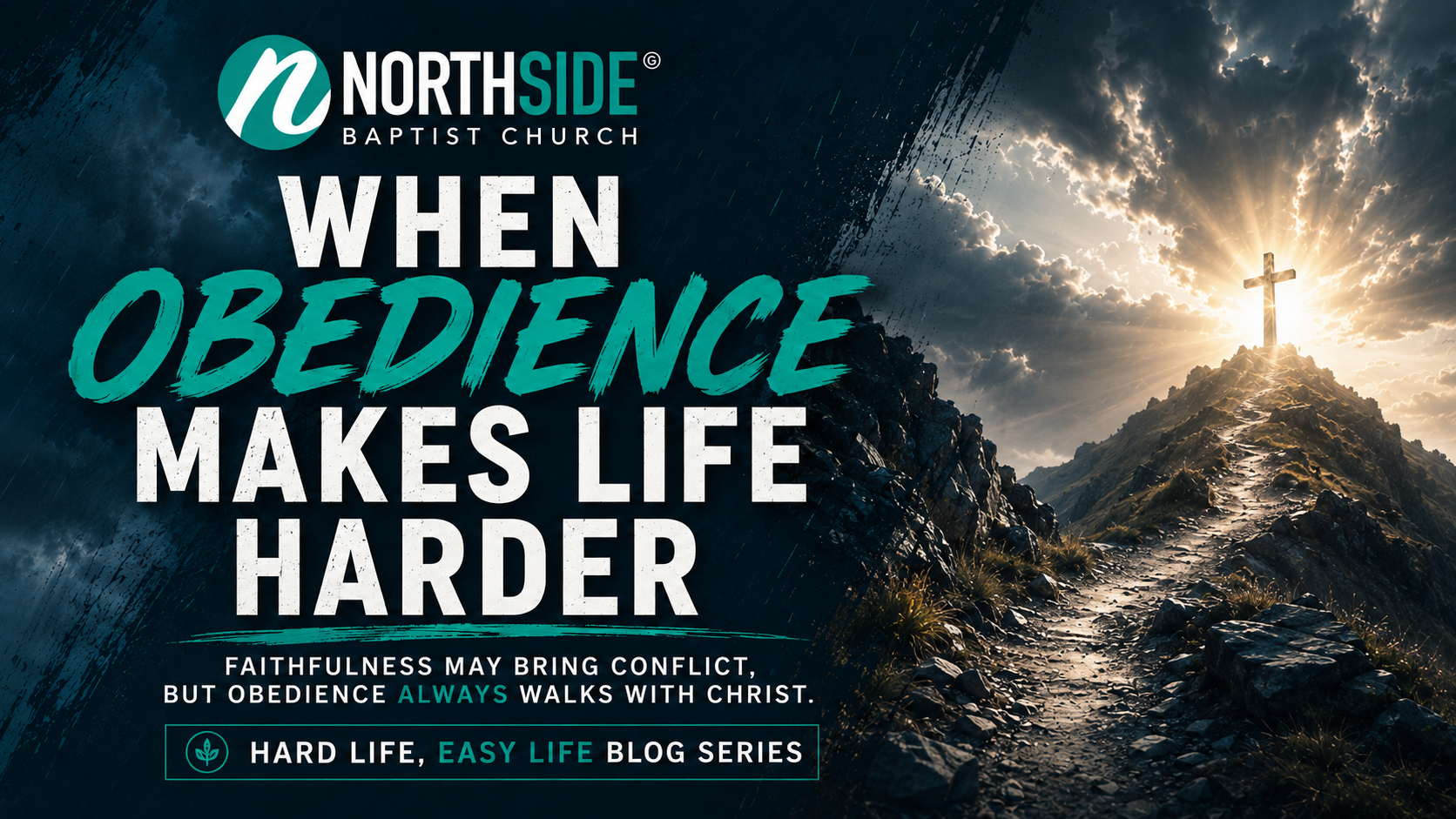
We often assume that if we obey God, everything should begin falling into place.
If God told us to do it, surely the door will open.
Surely people will understand.
Surely the finances will work out.
Surely there will be peace.
But when we read the Bible carefully, we discover something surprising:
Obedience often creates difficulty before it produces visible results.
Consider Moses.
God called Moses to return to Egypt and tell Pharaoh to release the Israelites.
Moses obeyed.
We might expect Pharaoh to recognize God’s authority and immediately let Israel go.
Instead, Pharaoh became more stubborn.
In fact, the Israelites’ situation initially became worse.
They came to Moses complaining that his obedience had made their lives harder.
Imagine how Moses must have felt.
“God, You told me to do this, and everything just got worse.”
Have you ever experienced that?
You make the right decision and somebody gets angry.
You tell the truth and it costs you.
You refuse to compromise and you lose an opportunity.
You decide to follow biblical convictions and suddenly certain relationships become uncomfortable.
You obey God and life becomes more complicated.
That does not necessarily mean you made the wrong decision.
Sometimes resistance is evidence that obedience matters.
Daniel is another example.
Daniel did not end up in the lions’ den because he stopped praying.
He ended up there because he kept praying.
Shadrach, Meshach, and Abednego were not thrown into the furnace because they compromised.
They were thrown into the furnace because they refused to compromise.
Stephen was not stoned because he abandoned the Gospel.
He was stoned because he preached it.
John the Baptist did not lose his life because he avoided truth.
He lost his life because he spoke truth to power.
Throughout Scripture, faithful obedience often produced external conflict.
That is why we need to separate two ideas that are frequently confused:
Peace with God is not the same thing as peaceful circumstances.
A Christian can be at peace with God while everything around him is in turmoil.
Paul and Silas provide one of the greatest examples.
They had been beaten.
They were imprisoned.
Their feet were fastened in stocks.
Nothing about their circumstances looked peaceful.
Yet Acts 16 tells us that around midnight they were praying and singing hymns to God.
How?
Their peace was not dependent on their surroundings.
Their peace came from knowing God.
That is the kind of peace Jesus offers.
Jesus said in John 14:27:
“Peace I leave with you; my peace I give to you. Not as the world gives do I give to you.”
The world says peace comes when the problem disappears.
Jesus says peace can exist while the problem is still present.
The world says peace comes when everyone approves of you.
Jesus says peace comes when you know you are walking faithfully with Him.
That does not mean Christians should go looking for conflict.
We should be humble.
We should be gracious.
We should pursue peace whenever possible.
But we should never purchase peace by sacrificing obedience.
There are moments when following Christ means standing when everyone else bows.
There are moments when following Christ means speaking when everyone else stays silent.
There are moments when following Christ means saying “no” when everyone around you says “yes.”
And sometimes that obedience will cost you.
But we need to remember what Jesus said in Matthew 16:
“If anyone would come after me, let him deny himself and take up his cross and follow me.”
Following Jesus was never designed to be a convenient accessory to our lives.
It is surrender.
And surrender sometimes hurts.
But obedience carries something comfort can never give us:
The assurance that we are walking with Christ.
You may be facing a difficult decision right now.
One path is easier.
The other path is obedient.
Do not automatically assume the easier road is God’s road.
Sometimes the hardest decision is the faithful one.
And when obedience makes life harder, remember this:
God has not necessarily left you.
He may be leading you through the very place where your faith will become stronger.
